Thursday, September 22, 2022

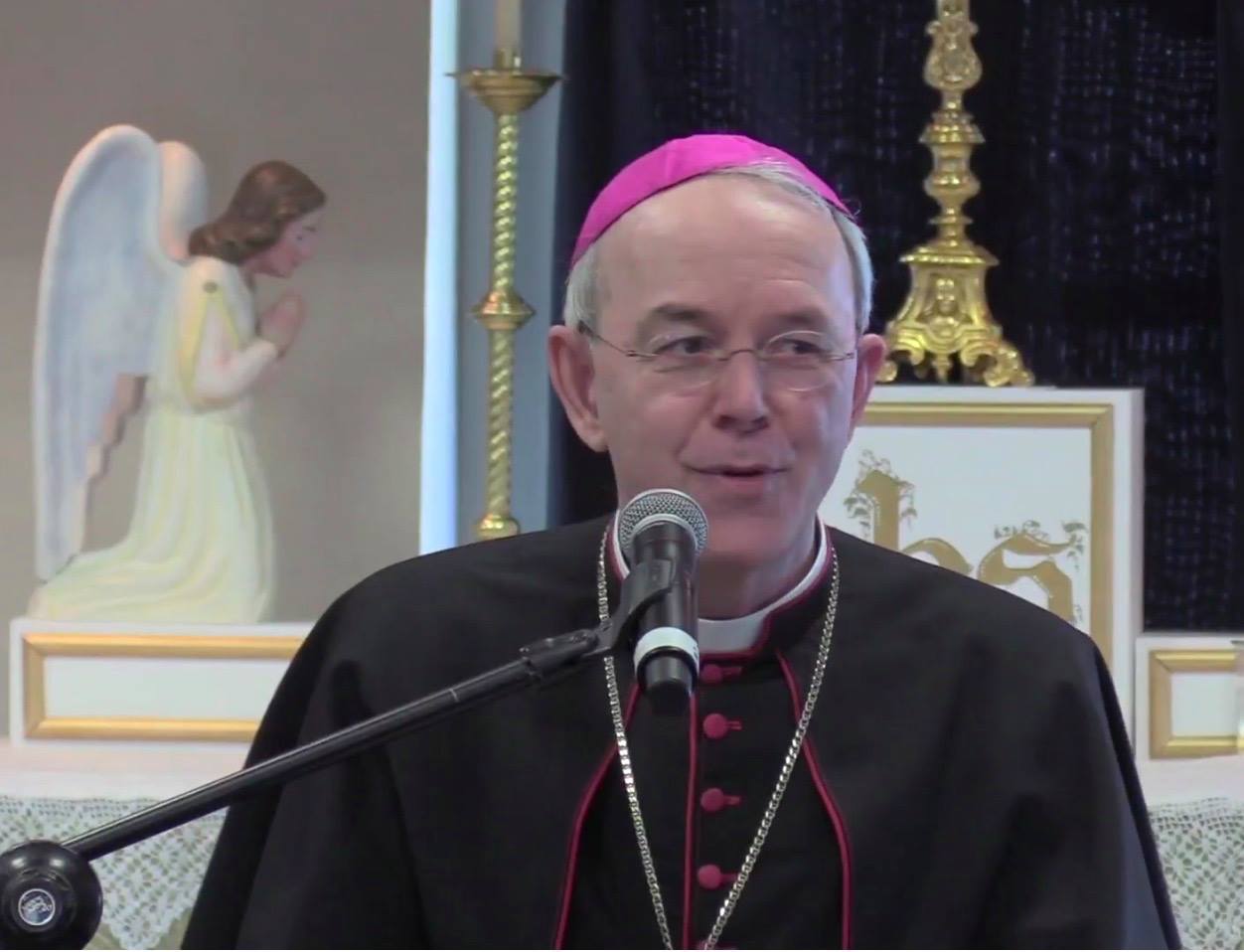
Archbishop Cordileone Answers Questions about Mass of the Americas, a Polyphonic Mass Setting Composed by Frank La Rocca

The following interview was conducted with Archbishop Salvatore Cordileone via email by 

Q:  What is the significance of the plural in the title, “Mass of the Americas”? 

The idea first came to me early in 2018 as I was looking at the calendar for the year. In the Archdiocese of San Francisco we hold our archdiocesan-wide celebration of Our Lady of Guadalupe on the Saturday before the actual feast day. That year it occurred on December 8. So, we would be celebrating the Mass of the Immaculate Conception, the patroness of the United States and a holy day of obligation here, in the midst of our festivities to honor Our Lady of Guadalupe, patroness of Mexico and all of the Americas. 

I realized that this was a golden opportunity to lift up Our Lady as a unifier of God’s people, of all races and languages, from both sides of the southern border. With all the tensions and divisions in society today, we need to look to our Blessed Mother. We all love her, and, like all mothers, her love unites us into one family of God. I conceived of the "Mass of the Americas," then, as a unity Mass to Our Mother. In Europe they see all of the Americas as one continent, “America.” In our hemisphere we refer to the “Americas,” because of the geographical, historical, cultural and linguistic differences. But we can learn a lesson from how the Europeans see this hemisphere, and seek to build up better mutual understanding and unity. Our Blessed Mother is the way there, and the music of this Mass in a twin honor to Our Lady under these two titles unites these themes. Thus, the “Mass of the Americas.”

Q.  Why have a new Mass composed, as opposed to singing Palestrina, Purcell, etc.?  How does this affect American liturgy?   

Well, in the first place, there is no Palestrina Mass, nor of any other great sacred music composer in history for that matter, conceived as a twin tribute to Our Lady of the Immaculate Conception and Our Lady of Guadalupe. Great music in the high sacred tradition composed on themes spiritually appropriate for our times is our vision. Great art in any form is appropriate and relatable to the culture of a particular time and place and reflects that culture, but also elevates it by bringing it into a continuity of tradition that has withstood the test of time and attained the status of classic beauty, giving it the quality of universality: beautiful in every age, culture and generation.

Secondly, it is important that the Church’s great tradition in sacred music and the arts not be viewed as a dead tradition, but one that has been handed on and lives today. This is how it works with secular classical music: the great orchestras of the world continue to play the great symphonies of the great composers – Haydn, Mozart, Beethoven, Brahms and so forth; but new compositions of the same genre are being made all the time, and the great orchestras of the world also play those. Likewise for religious classical music, that is, sacred music: our artists need to know we value their work, including a creative genius like Frank La Rocca but also young artists. The circle of composers gathering around the Benedict XVI Institute want primarily to use their gifts for the worship of God. If the concert stage is the only place that welcomes sacred music, we have a problem. 

Q:  Many people are musical purists, who feel they only pray well with chant—or with Marty Haugen—or some other subgenre of religious music.  Can people be wrong about what music helps them experience transcendence?  And is personal spiritual experience (even when it is genuine) the right metric for deciding what music to use at Mass?  (I think of Sacrosanctum Concilium here, which gives chant “pride of place,” but also allows for “other kinds of sacred music, especially polyphony.”) 

You’re certainly right about what Vatican II taught on sacred music, a principle going back to Pope St. Pius X and continuing right up through Vatican II, Pope St. Paul VI, and the current documents on the Sacred Liturgy: that the people learn to sing the Gregorian chants together in Latin, while allowing for other kinds of music suitable to the liturgical action. Polyphony developed organically from chant, and has withstood the test of time. Again, this is what gives it the status of classic, the quality of universal beauty. Contemporary compositions have not yet been subject to such a test of time. So only time will tell. But let us keep in mind that the purpose of the Mass is to worship God and to bring us into an encounter with Christ in the Eucharist. If that is happening for anyone in their current parish I don’t want to take that away. But our emptying pews suggest it is not happening for many people.

More beauty and reverence in the liturgy is needed, for that is what, in the first place, qualifies as fitting for the worship of the one, true God. I am convinced it is also central to the key problem we are confronting nowadays, namely, that so many Mass-going Catholics don’t understand or experience the Real Presence of Jesus Christ in the Eucharist. Every Mass is a miracle. When the outward form of the liturgy doesn’t correspond to the reality of the Mass, people have trouble understanding and experiencing Jesus Christ in the Mass. 

Q: Is the length of "Mass of the Americas" a problem for celebrant and congregation?  There are other great compositions—Bach’s B Minor Mass, or Beethoven’s Missa Solemnis—that are almost never sung in context for this reason. 

The "Mass of the Americas" is really conceived of as a Cathedral Mass. It’s not so much the length as the orchestra that makes it prohibitive for parish use in most parishes. That is one reason we recently released at the Napa Institute the parish version for choir and organ (https://benedictinstitute.org/larocca/). That said, the "Mass of the Americas" has touched a chord and has been celebrated in Tijuana, Houston, New Jersey, New York, Washington D.C., Rome, Chicago and more. 

The orchestrated Mass compositions you mention are certainly beautiful, but they are really written more for the concert hall than for worship. This was the movement begun by Pope St. Pius X when he introduced for the first time the principle of active participation into the Church’s Magisterium with his Apostolic Letter Tra le sollecitudini of 1903. The Mass had become more of a performance, with the people as passive observers. Gregorian chant is the Church’s patrimony of liturgical music, and he sought to restore the principle of people actively involved in worship by singing together the chants that are the music proper to Catholic worship. But by holding up polyphony as a prime example of other types of music suitable to the liturgical action, Vatican II acknowledges that there is also a place for choral music, which engages the people with active listening, as is the case when the word of God is proclaimed in the liturgical assembly.

Q:   "Mass of the Americas" has been used in both the Novus Ordo and the Traditional or Tridentine Rite.  Was it deliberately composed with both rites in mind?   

I originally conceived the Mass for our Cathedral on the occasion of our celebration for Our Lady of Guadalupe, and so as a Novus Ordo Mass with the musical pieces in Spanish, Latin, English and Nahuatl (the language of the Aztec people). When I later was asked to celebrate a Solemn High Pontifical Mass in the Extraordinary Form at the Basilica of the National Shrine of the Immaculate Conception, I asked Frank LaRocca to adapt it to that form of the Mass. I did not originally conceive it for that, but that is how it happened.   

Q: Who would you say is the audience for "Mass of the Americas," or for whom would you say it was commissioned and composed?  

My first intent was to offer a fitting unity Mass for the faithful of San Francisco. As I mentioned, in 2018 our archdiocesan-wide celebration of Our Lady of Guadalupe was going to be held on the Solemnity of the Immaculate Conception. Since Hispanic Catholics and Catholics descended from European immigrants of generations ago tend not to intermingle too much, I thought that this would provide some impetus to bring the two communities closer together and allow us to celebrate both great Feast days together.   

We later brought it to Tijuana as part of a national liturgy conference the Mexican bishops were holding. It was also enthusiastically received there. That’s when we conceived of an international Marian unity tour. It has certainly touched a chord in people’s hearts. I’m especially gratified that U.S. priests are beginning to use the music in their First Mass celebrations. I hadn’t imagined that, but it certainly seems fitting. 

Saturday, September 17, 2022

A Look Back at the Bay Area Visit of Athanasius Schneider, Auxiliary Bishop from Kazakhstan

His Excellency Bishop Athanasius Schneider has been referred to in the National Catholic Register as “one of the leading voices of fidelity, continuity, and tradition in the Church today.” In some ways, it is hard to account for the scope of his influence, in light of the fact that Bishop Schneider is only an auxiliary bishop of Astana, in Kazakhstan, a country with only around 150,000 Roman Catholics. (Astana is the former and about to be restored name of the city currently named Nur-Sultan, which is where Pope Francis visited this past week.) 

Even though Kazakhstan is the world’s ninth largest country, many have never even heard of it (at least not until Pope Francis' recent visit there).  So it is a bit of a marvel that, in spite of the relative humble obscurity of his role as an auxiliary bishop serving in that less-than-famous locale, Bishop Schneider is invited often to appear in many far-away places.

In 2018, I had the privilege to interview Bishop Schneider in the San Francisco Bay Area after he celebrated a Pontifical Mass at the Immaculate Heart of Mary Oratory when the oratory was still hosted at Five Wounds Portuguese National Church in San José. 


You can read the interview here at Homiletic and Pastoral Review. 


After the interview, Bishop Schneider went to Monterey, where he was the principal speaker for the 2018 Latin Mass/Keep the Faith Conference, which was the main event that brought him to the Bay Area. Then, after the conference, Bishop Schneider was a guest for dinner at Archbishop Cordileone's residence. 

Enmity or Fraternal Correction?

Bishop Schneider is portrayed by some as an enemy of Pope Francis, because he speaks frequently in what he refers to as fraternal correction to some of papal actions. For one example, in our interview, he spoke about how he and two other Kazakhstan bishops released a statement on the indissolubility of marriage on December 31, 2017 in response to the much-disputed footnote to the pope's Apostolic Letter Amoris Laetitia, which allows some couples living in unblessed marriages to receive Communion after "accompaniment." 

More recently, in January 2022, Bishop Schneider asked the pope to rescind the provisions contained in Traditionis Custodes and in the Responsa ad dubia issued by the Congregation for Divine Worship and the Discipline of the Sacraments (CDW) just before Christmas, which restricts the celebration of the Traditional Latin Mass and the sacraments according to the books in effect in 1962. See here.

And then this week, a Reuter's article titled "As pope Kazakhstan visit ends, conservative critic speaks out," described Bishop Schneider as an "arch conservative who has often pointedly criticised the progressive pope on a host of issues."  The article quoted Bishop Schneider's objections to the pope's visit to Kazakhstan for the Seventh Congress of Leaders of World and Traditional Religions:

"'While praising the congress' ability to 'promote mutual respect in the world,' Schneider, 61, said he believed it risked the 'danger' of putting Catholicism on the same plane as other religions."

So, I wondered if Bishop Schneider would meet Pope Francis when the pope was in Kazakhstan, and if so, whether the meeting would be cordial—until I saw the following photo. The photo looks pretty cordial to me.

Catholicism in Kazakhstan 

(Excerpt from the earlier-mentioned Homiletic and Pastoral Review article titled "Kazakhstan Bishop Schneider Broadcasts Seeds of Faith Around the World")

The story of how Bishop Schneider came to become a contributor to the renewal of Catholicism in Kazakhstan in the post-Soviet area, before he become a world-traveling proponent of traditional Catholic teachings, is well worth reading about. 

Bishop Schneider was born, baptized, and was named Anton in 1961 in the former Soviet Union. He first learned to practice and treasure his faith from devoutly Catholic parents, who experienced extreme hardships and upheavals during World War II, and later under Soviet rule.

His parents were originally among hundreds of thousands of ethnic Germans whose forebears had settled in villages near Odessa in the Ukraine, on the Black Sea. In an interview quoted in a Zenit article, Bishop Schneider spoke extensively about his childhood, and the following quotes are from that article. Other biographical details were gleaned from other sources.

At the end of the Second World War, “the German Army took all these German people — 300,000 of them — [from the Black Sea area] to Berlin …. And when the Russian Army occupied Berlin, they took back these people as ‘forced labor’ to three places — Kazakhstan, Siberia and to the Ural Mountains.”

His parents were among those sent to the Ural Mountains. “They were forced to work there, and it’s a miracle that they survived. When they were freed, they moved to Central Asia, which was then part of the Soviet Union, in the Republic of Kyrgyzstan, a little republic close to the Chinese border, just below Kazakhstan.” He never went to the neighboring country of Kazakhstan to the north until many years later.

“There, I was born and spent my childhood. Then we moved from Kyrgyzstan to Estonia, which was still part of the Soviet Union. There, I lived for four years.”

Always when they lived under Soviet rule, the family had to practice its Catholic faith secretly, because religion was suppressed.

Finally, they were able to attend Mass when they lived in Estonia, but it was not at all easy. “We had a church which was 100 kilometers [62 miles] away, and we had to travel that 100 kilometers to attend the Holy Mass.” His parents took their four children to Mass by train once a month (because they could not afford the fare to go more often). At the time, he was between 10 and 12 years of age. They left for Mass on the first train before dawn, and returned on the last train after dark, and “it was dangerous, because, during those times, the Communist government forbade children from participating in the Holy Mass.”

Communion in the Hand Gave Him Pain in His Soul

In 1973, after Bishop Schneider made his First Holy Communion, he emigrated with his family to Rottweil in West Germany. Shocked at the age of 12 when he first saw people taking Communion in the hand, as he told the National Catholic Register, “I carried this pain in my soul,” and it prompted him to write his 2009 book on the Eucharist, Dominus est—It is the Lord: Reflections of a Bishop of Central Asia on Holy Communion.

As a young man, he joined the revived Order of the Canons Regular of the Holy Cross of Coimbra in Austria in 1982 and took the religious name of Athanasius. He studied philosophy at the University of St. Thomas Aquinas (the Angelicum) in Rome, and theology at the Sapientiae Institute of Anápolis, Brazil. After he was ordained a priest in March 1990, he obtained a doctorate in patristic theology in 1997 from the Augustinianum in Rome.

Bishop Schneider returned to Central Asia only by chance. When he was still in Rome, and planning to return to Brazil, a priest whom he had not previously met invited him to help foster the revival of the Catholic Church by coming to teach at the newly formed seminary in Karaganda, Kazakhstan. In Karaganda, Bishop Schneider not only taught, but he helped build the seminary, and while he was also building the Cathedral of Our Lady of Fatima, he commissioned the Italian artist, Rodolfo Papa, to make a series of fourteen paintings for the crypt of the cathedral on the theme of the Eucharist, a subject which is always close to his own heart.

After Athanasius Schneider was ordained a bishop in June of 2006 in St. Peter’s Basilica, he was first assigned as auxiliary bishop in Karaganda. In 2011, he was transferred to the position of auxiliary bishop in the Archdiocese of Astana, also in Kazakhstan. He also still manages to teach at the seminary.

When I listened to Bishop Schneider’s description about how he tries to evangelize in Kazakhstan through presence, through witness, and through personal contacts—I also thought about how widely he travels and teaches. This made me realize that he is doing the same thing around the world as he does in his own diocese in evangelizing through presence, through witness, and through personal contact. He seems to me to be a kind of saintly “Johnny Appleseed,” planting seeds of authentic Catholic doctrine as he travels around.

Monday, August 29, 2022

RECENT CATHOLIC CONVERT SHIA LEBOUEF CREDITS TRADITIONAL LATIN MASS WITH ENRICHING HIS NEW-FOUND FAITH

Major news this past week, especially among Catholic press, has been the conversion to Catholicism of scandal-ridden actor Shia LaBoeuf. Internet sources say LaBoeuf had already become a Christian in 2014 while filming a movie titled "Fury." Even so, LaBoeuf's actions since then—which he shamefacedly now calls disgusting—brought him ostracism. His career was in ruins.

The actor's conversion to the Catholic faith came during his preparation for playing Saint Pio of Pietrelcina in "Padre Pio"—a new movie premiering in Venice during the Venice Film Festival next week. The offer to play the role came at a time when he was an outcast. "Even my mother did not want to have anything to do with me." And he was close to suicide. "I had the gun on the table. . . . Pio saved my life."

LaBoeuf told Bishop Robert Barron in one interview among many during his press junket how he came to believe in the Catholic faith while hanging out with Capuchin Franciscan monks at their seminary in San Lorenzo as part of his research for the role, since Padre Pio was a Capuchin. At nearby Mission Sant Inez, LaBoeuf then received RCIA instruction from a Sacred Heart sister and was received into the Catholic Church. LaBoeuf also needed to learn the traditional Latin Mass—because that was the Mass of St. Pio. So he went on to study the TLM with a canon from the Institute of Christ the King in Oakland, California 

I spoke to the canon who trained LaBoeuf, who didn't want his name mentioned. When he got the call asking him to train LaBoeuf, he thought it was a joke at first, but he agreed and trained the actor how to perform the parts of the TLM he was going to portray in the movie.

At daily TLMs offered at St. Margaret Mary Church, LaBoeuf found he was drawn from a kind of intellectual (what he calls "heady") kind of belief to a deeper emotional connection to the Mass and to Faith.

The following quotes are from Bishop Barron's interview with LaBoeuf, with some of the seemingly heartfelt but not always accurate terminology of a new convert.

TLM Affects Me, Like I've Been Let In on Something Very Special

"Latin Mass affects me deeply, because it feels like they're not selling me a car. At Santa Inez where I was catechized there is a lot of guitar playing and there is a lot of what feels like they are trying to sell me on an idea.

"There is something else that happens in Oakland at the Latin Mass every day of the week. It feels almost like I'm being being let in on something very special."

No Need to Know the Words

"It may feel exclusive sometimes, like I have to know Latin to experience it. But however I would also say that .. . I don't need to know the words. . . . I know what's going on. I feel it deeply. It almost feels more powerful than when I know every single word. It takes me out of the realm of the intellectual, and it puts me squarely in the realm of the feeling and the beauty thing you talk about.

"To deny some of the senses, heightens some of the others. So when you put me in this rationalist logical word, word, word, word, word . . . it takes me out of the feeling realm. Whereas Latin Mass puts me squarely in the feeling realm, because I can't argue the word, because I don't know what the word means—so I'm just left with this feeling that feels sacred and connected."

TLM Took Me Out of Belief Into Connection

"I had belief, but I never had a connection. The Latin Mass took me out of belief into connection."


At the end of the official trailer of "Padre Pio," Shia LaBoeuf portrays Padre Pio at the Consecration during a traditional Latin Mass.

Wednesday, December 23, 2020

O Antiphon For December 23: O Emmanuel, O God with Us

The Prophet Isaiah, by Michelangelo, Sistine Chapel

On December 23, the last of the Great O antiphons of Advent is sung at Vespers (Evening Prayer). By the next evening on December 24, the time of waiting will be over, because the Feast of Christmas begins at Vespers on Christmas Eve.  

This antiphon begins by addressing our Savior with the Messianic name, Emmanuel, God with us. The antiphon then echoes His title as king (from O Rex Gentium), adds the title of lawgiver, repeats that He is the longed for One and Savior of the nations. It ends with a petition, "come and save us.”

O Emmanuel, Rex et legifer noster, exspectatio gentium, et Salvator earum: veni ad salvandum nos, Domine, Deus noster. 
O Emmanuel, our king and lawgiver, longing of the nations and Savior thereof: Come and save us, O Lord our God.
Here are the corresponding modified hymn verses from "Veni, Veni, Emmanuel" and "O Come, O Come Emmanuel":
Veni, veni, Emmanuel,
Captivum solvet Israel
Qui gemit in exsilio
Privatus Dei Fillio

O come, o come, Emmanuel,
And ransom captive Israel,
That mourns in lonely exile here,
Until the Son of God appears.

Scriptural Origins

Isaiah 7:14: "Therefore the Lord himself will give you a sign. Behold, a young woman shall conceive and bear a son, and shall call his name Imman′u-el."

Matthew 1:20b-23: "'[T]hat which is conceived in her is of the Holy Spirit; she will bear a son, and you shall call his name Jesus, for he will save his people from their sins.' All this took place to fulfill what the Lord had spoken by the prophet: 'Behold, a virgin shall conceive and bear a son, and his name shall be called Emman′u-el' (which means, God with us).

Dom Gueranger's Commentary about O Emmanuel:

O Emmanuel ! King of peace! Thou enterest today the city of Thy predilection, the city in which Thou hast placed Thy temple—Jerusalem. A few years hence the same city will give Thee Thy cross and Thy sepulchre: nay, the day will come on which Thou wilt set up Thy judgement-seat within sight of her walls. But to-day Thou enterest the city of David and Solomon unnoticed and unknown. It lies on Thy road to Bethlehem. Thy blessed Mother and Joseph her spouse would not lose the opportunity of visiting the temple, there to offer to the Lord. their prayers and adoration. They enter; and then, for the first time, is accomplished the prophecy of Aggeus, that great shall be the glory of this last house more than of the first ; for this second temple has now standing within it an ark of the Covenant more precious than was that which Moses built; and within this ark, which is Mary, is contained the God whose presence makes her the holiest of sanctuaries. The Lawgiver Himself is in this blessed ark, and not merely, as in that of old, the tablet of stone on which the Law was graven. The visit paid, our living ark descends the steps of the temple, and sets out once more for Bethlehem, where other prophecies are to be fulfilled. We adore Thee, O Emmanuel ! in this Thy journey, and we reverence the fidelity wherewith Thou fulfillest all that the prophets have written of Thee; for Thou wouldst give to Thy people the certainty of Thy being the Messias, by showing them that all the marks, whereby He was to be known, are to be found in Thee. And now, the hour is near; all is ready for Thy birth; come then, and save us; come, that Thou mayst not only be called our Emmanuel, but our Jesus, that is, He that saves us.
See "History and Mystery: The O Antiphons in a Favorite Hymn" for my post on the relationship between the O antiphons,"Veni, Veni, Emmanuel" and "O Come, O Come Emmanuel." 

Tuesday, December 22, 2020

O Antiphon for December 22: O Rex Gentium, O King of the Nations


Christ the Judge (1447), by Fra Angelico. At the Duomo of Orvieto, Italy


The O antiphon for Dec. 22nd begins by addressing our Savior with the Messianic name, O Rex Gentium. The antiphon then describes what this title symbolizes, and it ends with a petition, "come and . . ..”
O Rex Gentium, et desideratus earum, lapisque angularis, qui facis utraque unum: veni, et salva hominem quem de limo formasti..

O King of the gentiles and their desired One, the cornerstone that makes both one: come, and deliver man, whom you formed out of the dust of the earth.

The word Gentium comes from gens, which means tribe, clan; nation, people; Gentiles. The Jews would have understood the word as referring to the Gentiles.

Calling on Christ as Rex Gentium et desideratus earum (King and desired one of all the nations) means that even those who have never heard of true God or His promised Messiah, and even those who do not know they need salvation, long for Him.

The corresponding modified hymn verses from "Veni, Veni, Emmanuel" and "O Come, O Come Emmanuel":

Veni, veni, Rex gentium, Veni Redemptor omnium: Ut salvas tuos famulos Peccati sibi conscios.

Come, O come, King of the nations, come, Redeemer of all: that Thou mayst save Thy family from the guilt of their sins.

Scriptural Origins:

King of the Nations 
Jeremiah 10:7:
7 Who would not fear thee, O King of the nations? For this is thy due; for among all the wise ones of the nations and in all their kingdoms there is none like thee.
Desired of all nations 
Haggai 2:4-8:
"My Spirit abides among you; fear not. For thus says the Lord of hosts: Once again in a little while, I will shake the heavens and the earth and the sea and the dry land; and I will shake all the nations — and the desired of all nations shall come; and I will fill this house with splendour, says the Lord of hosts."

Cornerstone
Psalm 118:22: "The stone which the builders rejected has become the head of the corner."

Isaiah 28:16a: "Behold, I am laying in Zion for a foundation a stone, a tested stone, a precious cornerstone, of a sure foundation."

Matthew 21:42, Mark 12:10, and Luke 20:17: "Jesus said to them, 'Have you never read in the scriptures: ‘The very stone which the builders rejected has become the head of the corner; this was the Lord’s doing, and it is marvelous in our eyes’?"

Acts 4:8-12:
8 Then Peter, filled with the Holy Spirit, said to them, “Rulers of the people and elders, 9 if we are being examined today concerning a good deed done to a cripple, by what means this man has been healed, 10 be it known to you all, and to all the people of Israel, that by the name of Jesus Christ of Nazareth, whom you crucified, whom God raised from the dead, by him this man is standing before you well. 11 This is the stone which was rejected by you builders, but which has become the head of the corner. 12 And there is salvation in no one else, for there is no other name under heaven given among men by which we must be saved.”

I Peter 2:7-8:
7 To you therefore who believe, he is precious, but for those who do not believe,
“The very stone which the builders rejected has become the head of the corner,”
8 and “A stone that will make men stumble, a rock that will make them fall”; for they stumble because they disobey the word, as they were destined to do.

Cornerstone Who Joins the Gentiles with Israel
Ephesians 2:14-16, 19-22: 
11 Therefore remember that at one time you Gentiles in the flesh, called the uncircumcision by what is called the circumcision, which is made in the flesh by hands— 12 remember that you were at that time separated from Christ, alienated from the commonwealth of Israel, and strangers to the covenants of promise, having no hope and without God in the world. 13 But now in Christ Jesus you who once were far off have been brought near in the blood of Christ. 14 For he is our peace, who has made us both one, and has broken down the dividing wall of hostility, 15 by abolishing in his flesh the law of commandments and ordinances, that he might create in himself one new man in place of the two, so making peace, 16 and might reconcile us both to God in one body through the cross, thereby bringing the hostility to an end.  19 So then you are no longer strangers and sojourners, but you are fellow citizens with the saints and members of the household of God, 20 built upon the foundation of the apostles and prophets, Christ Jesus himself being the cornerstone, 21 in whom the whole structure is joined together and grows into a holy temple in the Lord; 22 in whom you also are built into it for a dwelling place of God in the Spirit.

Dom Gueranger's Commentary about Rex Gentium

O King of nations! Thou art approaching still nigher to Bethlehem, where Thou art to be born. The journey is almost over, and Thy august Mother, consoled and strengthened by the dear weight she bears, holds an unceasing converse with Thee on the way. She adores Thy divine Majesty; she gives thanks to Thy mercy; she rejoices that she has been chosen for the sublime ministry of being Mother to God. She longs for that happy moment when her eyes shall look upon Thee, and yet she fears it. For, how will she be able to render Thee those services which are due to Thy infinite greatness, she that thinks herself the last of creatures ? How will she dare to raise Thee up in her arms, and press Thee to her heart, and feed Thee at her breasts? When she reflects that the hour is now near at hand, in which, being born of her, Thou wilt require all her care and tenderness, her heart sinks within her; for, what human heart could bear the intense vehemence of these two affections—the love of such a Mother for her Babe, and the love of such a creature for her God? But Thou supportest her, O Thou the Desired of nations! for Thou, too, longest for that happy birth, which is to give to the earth its Saviour, and to men that corner-stone, which will unite them all into one family. Dearest King! be Thou blessed for all these wonders of Thy power and goodness ! Come speedily, we beseech Thee, come and save us, for we are dear to Thee, as creatures that have been formed by Thy divine hands. Yea, come, for Thy creation has grown degenerate; it is lost; death has taken possession of it: take Thou it again into Thy almighty hands, and give it a new creation; save it; for Thou hast not ceased to take pleasure in and love Thine own work.

From Julian of Norwich

O Rex Gentium
O King of our desire whom we despise,
King of the nations never on the throne,
Unfound foundation, cast-off cornerstone,
Rejected joiner, making many one,
You have no form or beauty for our eyes,
A King who comes to give away his crown,
A King within our rags of flesh and bone.
We pierce the flesh that pierces our disguise,
For we ourselves are found in you alone.
Come to us now and find in us your throne,
O King within the child within the clay,
O hidden King who shapes us in the play
Of all creation. Shape us for the day
Your coming Kingdom comes into its own.


See "History and Mystery: The O Antiphons in a Favorite Hymn" for my post on the relationship between the O antiphons,"Veni, Veni, Emmanuel" and "O Come, O Come Emmanuel."

Monday, December 21, 2020

O Antiphon for December 21: O Oriens, O Dayspring from On High

It is especially fitting that we pray this antiphon today, on the Winter Solstice, the shortest day of the year in the Northern Hemisphere. This title of Christ, Oriens, means daybreak, dawn, sunrise, the East, the beginning, and the rising up—and so it also refers to the Resurrection. 

The O antiphon for Dec. 21th begins by addressing our Savior as O Oriens, O Dayspring or Dawn rising from the East. The antiphon then describes what the Oriens symbolizes, and it ends with a petition, "come and ....”

O Oriens, splendor lucis æternæ, et sol justitiæ veni et illumina sedentes in tenebris, et umbra mortis. 

O Orient! splendour of eternal light, and Sun of justice! come and enlighten them that sit in darkness, and in the shadow of death.

The corresponding modified hymn verses from "Veni, Veni, Emmanuel" and "O Come, O Come Emmanuel:"

Veni, veni o oriens! 
Solare nos adveniens, 
Noctis depelle nebulas, 
Dirasque noctis tenebras. 
R: Gaude, gaude, Emmanuel nascetur pro te, Israel.

O come, Thou Dayspring, from on high,
And cheer us by Thy drawing nigh;
Disperse the gloomy clouds of night,
And death's dark shadows put to flight.
Rejoice ! Rejoice ! Emmanuel
Shall come to thee, O Israel.

All the meanings of Oriens express the idea of light breaking through the darkness of night, of sin and death, of sickness and despair, with its brightness bringing healing and warmth. 

The church prays this petition daily in the Benedictus, the Canticle of Zechariah: "The dawn from on high shall break upon us, to shine on those who dwell in darkness and the shadow of death, and to guide our feet into the way of peace."(Luke 1:78-79).

This title of the Messiah is based on many additional Scripture texts.

Isaiah 9:1: "The people who walked in darkness have seen a great light. Upon those who dwelt in the land of gloom a light has shone".

Malachi 4:2: "For you who fear my name, there will arise the sun of justice with its healing rays."

John 3:16-21: "For God so loved the world that he gave his only Son, that whoever believes in him should not perish but have eternal life. For God sent the Son into the world, not to condemn the world, but that the world might be saved through him. He who believes in him is not condemned; he who does not believe is condemned already, because he has not believed in the name of the only Son of God. And this is the judgment, that the light has come into the world, and men loved darkness rather than light, because their deeds were evil. For every one who does evil hates the light, and does not come to the light, lest his deeds should be exposed. But he who does what is true comes to the light, that it may be clearly seen that his deeds have been wrought in God."

2 Peter 1:19: "Keep your attention closely fixed on it, as you would on a lamp shining in a dark place, until the first streaks of dawn appe

Dom Gueranger’s commentary about this O antiphon:

0 Jesus, divine Sun! Thou art coming to snatch us from eternal night blessed for ever be Thy infinite goodness! But Thou puttest our faith to the test, before showing Thyself in all Thy brightness. Thou hidest Thy rays, until the time decreed by Thy heavenly Father comes, in which all Thy beauty will break upon the world. Thou art traversing Judea ; Thou art near Jerusalem; the journey of Mary and Joseph is nigh its term. Crowds of men pass or meet Thee on the road, each one hurrying to his native town, there to be enrolled, as the edict commands. Not one of all these suspects that Thou, O divine Orient ! art so near him. They see Thy Mother Mary, and they see nothing in her above the rest of women; or if they are impressed by the majesty and incomparable modesty of this august Queen, it is but a vague feeling of surprise at there being such dignity in one so poor as she is; and they soon forget her again. If the Mother is thus an object of indifference to them, it is not to be expected that they will give even so much as a thought to her Child, that is not yet born. And yet this Child is Thyself, O ,Sun of justice! Oh! increase our faith, but increase, too, our love. If these men loved Thee, 0 Redeemer of mankind, Thou wouldst give them the grace to feel Thy presence. Their eyes, indeed, would not yet see Thee, but their hearts, at least, would burn within them, they would long for Thy coming, and would hasten it by their prayers and, sighs. Dearest Jesus! who thus traversest the world Thou hast created, and who forcest not the homage of Thy creatures, we wish to keep near Thee during the rest of this Thy journey: we kiss the footsteps of her that carries Thee in her womb; we will not leave Thee, until we arrive together with Thee at Bethlehem, that house of bread, where, at last, our eyes will see Thee, O splendour of eternal light, our Lord and our God!'

Venerable Bede wrote a wonderful evocation of this light, Christ O Oriens, our true Morning Star:

Christ is the morning star who when the night of this world is past brings to his saints the promise of the light of life and opens everlasting day."

Following is a prose translation of a section of some Advent lyrics written in the 8th century by Cynewulf, an Old-English vernacular poet.

Lo! Thou Splendor of the dayspring, fairest of angels sent to men upon earth, Thou Radiance of the Sun of righteousness, bright beyond the stars, Thou of Thy very self dost illumine all the tides of time! Even as Thou, God begotten of God, Son of the true Father, didst ever dwell without beginning in the glory of heaven, so Thine own handiwork in its present need imploreth Thee with confidence that Thou send us the bright sun, and come in Thy very person to enlighten those who have long been covered with murky cloud, and sitting here in darkness and eternal night, shrouded in sins, have been forced to endure the shadow of death. Now in the fulness of hope we believe in the salvation brought to men through the Word of God, who was in the beginning co-eternal with God the Father almighty, and afterward became flesh without blemish, being born of the virgin as a help for the afflicted. God appeared among us without sin; the mighty Son of God and the Son of Man dwelt together in harmony among mankind. Wherefore it is right that we should ever give thanks by our deeds unto the Lord of victory, for that He was willing to send Himself unto us.

And in our own times, Fr. Z. wrote this reflection in his post on O Oriens. 

We are all desperately in need of a Savior, a Redeemer who is capable of ransoming from the darkness of our sins and from the blinding and numbing wound of ignorance from which we all suffer. In their terrible Fall, our First Parents inflicted grave wounds in the souls of every person who would live after them, except of course - by an act of singular grace - the Mother of God. Our wills are damaged. Our intellect is clouded. In Christ we have the Truth, the sure foundation of what is lasting. All else, apart from Him fails and fades into dark obscurity. He brings clarity and light back to our souls when we are baptized or when we return to Him through the sacrament of penance. 

"At Holy Mass of the ancient Church, Christians would face "East", at least symbolically, so that they could greet the Coming of the Savior, both in the consecration of the bread and wine and in the expectation of the glorious return of the King of Glory. They turned to the rising sun who is Justice Itself, whose light will lay bare the truth of our every word, thought and deed in the Final Day. 

"This is the Solstice day, for the Northern Hemisphere the day which provides us with the least daylight of the year. From this point onward in the globe's majestic arc about the sun, we of the north, benefit from increasing warmth and illumination. It is as if God in His Wisdom, provided within the framework of the cosmos object lessons by which we might come to grasp something of His good plan for our salvation."
Last Judgment, by Giotto (1306), Scrovegni Chapel
See "History and Mystery: The O Antiphons in a Favorite Hymn" for my post on the relationship between the O antiphons,"Veni, Veni, Emmanuel" and "O Come, O Come Emmanuel."

Sunday, December 20, 2020

O Antiphon for December 20: O Clavis David, O Key of David

The O antiphon for December 20th begins by addressing our Savior as O Clavis David, O Key of David. It goes on to describe the symbolism of the Key of David, and it ends with the petition, "come and lead the prisoners from the prison house, that sit in darkness and the shadow of death.”

O Clavis David, et sceptrum domus Israel; qui aperis, et nemo claudit; claudis, et nemo aperit: veni, et educ vinctum de domo carceris, sedentem in tenebris, et umbra mortis.

O Key of David and sceptre of the House of Israel; who openest and no man shutteth; shuttest and no man openeth: come and lead the prisoners from the prison house, that sit in darkness and the shadow of death.
The corresponding modified hymn verses from "Veni, Veni, Emmanuel" and "O Come, O Come Emmanuel":
Veni clavis Davidica! Regna reclude coelica, Fac iter Tutum superum, Et claude vias Inferum. R: Gaude! Gaude! Emmanuel, nascetur pro te Israel.

O come, Thou Key of David, come And open wide our heav'nly home; Make safe the way that leads on high, And close the path to misery.
This title of the Messiah is based on many Scriptural texts.

Isaiah 9:6-7: "His dominion is vast and forever peaceful, Upon David’s throne, and over his kingdom, which he confirms and sustains By judgment and justice, both now and forever. The zeal of the LORD of hosts will do this!"

Isaiah 22:22: "I will place the key of the House of David on his shoulder. When he opens, no one shall shut; when he shuts, no one shall open."

Christ is from the line of David and is the heir of David as King of Israel, the heavenly kingdom, in a way that nobody expected. The ruler wore the keys, the symbol of his power and authority, on his shoulder. Christ wore no symbols of His authority.

Revelation 3:7: "To the presiding spirit of the church in Philadelphia write this: 'The holy One, the true, who wields David's key, who opens and no one can close, who closes and  no one can open.'"

Christ, the holy one and true, is the heir of David. All power and authority was given to him after the resurrection. He gave the power to "bind and to loose" our sins to the Apostles.

Matthew 16:18-19: "And so I say to you, you are Peter, and upon this rock I will build my church, and the gates of the netherworld shall not prevail against it. I will give you the keys to the kingdom of heaven. Whatever you bind on earth shall be bound in heaven; and whatever you loose on earth shall be loosed in heaven.”
  
Jesus is the One who unlocks the fetters of sin that  keep us tightly chained and who frees us from our captivity.  

Psalm 107: 10, 14:  "they dwelt in darkness and gloom, bondsmen in want and in chains,...and he led them forth from darkness and gloom and broke their bonds asunder." 

Dom Gueranger’s commentary about this O antiphon for December 20:
O Jesus, Son of David! heir to his throne and his power! Thou art now passing over, in Thy way to Bethlehem, the land that once was the kingdom of Thy ancestor, but now is tributary to the Gentiles. Scarce an inch of this ground which has not witnessed the miracles of the justice and mercy of Jehovah, Thy Father, to the people of the old Covenant, which is so soon to end. Before long, when Thou hast come from beneath the virginal cloud which now hides Thee, Thou wilt pass along this same road doing good, 1 healing all manner of sickness and every infirmity, and yet having not where to lay Thy head.  Now, at least, Thy Mother’s womb affords Thee the sweetest rest, and Thou receivest from her the profoundest adoration and the tenderest love. But, dear Jesus, it is Thine own blessed will that Thou leave this loved abode. Thou hast, O eternal Light, to shine in the midst of this world’s darkness, this prison where the captive, whom Thou hast come to deliver, sits in the shadow of death. Open his prison-gates by Thy all-powerful key. And who is this captive, but the human race, the slave of error and vice? Who is this captive, but the heart of man, which is thrall to the very passions it blushes to obey? Oh! come and set at liberty the world Thou hast enriched by Thy grace, and the creatures whom Thou hast made to be Thine own brethren.'

Christ bestowing the power of the keys upon St. Peter. Byzantine-style Venetian glass mosaic 

behind the altar at the Cathedral of Saint Peter in Chains, Cincinnati, Ohio, USA


See "History and Mystery: The O Antiphons in a Favorite Hymn" for more on the relationship between the O antiphons,"Veni, Veni, Emmanuel" and "O Come, O Come Emmanuel."

Saturday, December 19, 2020

O antiphon for Dec. 19th: O Radix Jesse, O Root of Jesse

The O antiphon for Dec. 19th begins by addressing our Savior, who is about to be born as a man, as O Radix Jesse, O Root of Jesse. The antiphon then describes what the name symbolizes, and it ends with a petition, “come to deliver us, delay thou not.”

O Radix Jesse, qui stas in signum populorum, super quem continebunt reges os suum, quem gentes deprecabuntur: veni ad liberandum nos, jam noli tardare.

O Root of Jesse, which standest as a sign to the peoples, at whom kings shall shut their mouths, whom the gentiles shall beseech, come to deliver us, delay thou not!

The corresponding modified hymn verses from "Veni, Veni, Emmanuel" and "O Come, O Come Emmanuel":

Veni, O Jesse Virgula: Ex hostis tuos ungula, de specutuos tartari Educ, et antro barathri. R: Gaude! Gaude! Emmanuel, nascetur pro te Israel!

Come, O Rod of Jesse: from the clutches of the enemy, from the snares of hell, and from the depths of the netherworld lead forth thine own. R: Rejoice! Rejoice! O Israel, to thee shall come Emmanuel!”
Jesse was the father of David and a descendant of Judah, Jacob, Isaac and Abraham. God chose Jesse (and his youngest son, the shepherd David) as recorded in this Scripture: "And the Lord said unto Samuel ... Fill thine horn with oil and go; I will send thee to Jesse, the Bethlehemite, for I have provided me a king among his sons"—1 Samuel 16:1. Bethlehem, where Jesus was born, is also called the city of David.

Isaiah, the prophet, wrote this about 300 years later, "And there shall come forth a rod out of the stem of Jesse, and a branch shall grow out of his roots; And the spirit of the Lord shall rest upon him, the spirit of wisdom and understanding, the spirit of counsel and might, the spirit of knowledge and the fear of the Lord" Isaiah 11:1-2.

This prophecy refers to the coming Messiah as the "rod out of the stem of Jesse" and as a "branch" that will grow out of Jesse's roots. By the use of the Hebrew word, netzer, for branch, the prophecy even went so far as to specify the place where Messiah would live, in a play on words. The town Natzeret [Nazareth] is the word netzer plus the feminine ending. "And He came and dwelt in a city called Natzeret (Nazareth), that it might be fulfilled what was spoken by the prophets" Matthew 2:23.

The hymn refers to Jesus as the rod of Jesse unlike the O antiphon, which refers to Jesus as the "root of Jesse." Radix Jesse is the term used for the Messiah in another prophecy from Isaiah, "In that day there shall be a root of Jesse who shall stand for an ensign [a sign] to the peoples" Isaiah 11:10.

Also unlike the hymn, the O antiphon refers to the part of the prophecy that foretold that the Messiah would be a standard bearer who will attract the Gentiles and that the Messiah would deliver His people, "And He shall set up an ensign for the nations, and shall assemble the outcasts of Israel, and gather together the dispersed of Judah from the four corners of the earth."—Isaiah 11:12. 

Dom Gueranger’s commentary about this O antiphon for December 19:

"At length, O Son of Jesse! thou art approaching the city of thy ancestors. The Ark of the Lord has risen, and journeys, with the God that is in her, to the place of her rest. 'How beautiful are thy steps, O thou daughter of the Prince,' [Cant. vii. 1.] now that thou art bringing to the cities of Juda their salvation! The Angels escort thee, thy faithful Joseph lavishes his love upon thee, heaven delights in thee, and our earth thrills with joy to bear thus upon itself its Creator and its Queen. Go forward, O Mother of God and Mother of Men! Speed thee, thou propitiatory that holdest within thee the divine Manna which gives us life! Our hearts are with thee, and count thy steps. Like thy royal ancestor David, 'we will enter not into the dwelling of our house, nor go up into the bed whereon we lie, nor give sleep to our eyes, nor rest to our temples, until we have found a place in our hearts for the Lord whom thou bearest, a tabernacle for this God of Jacob.” [Ps. cxxxi. 3-5.] Come, then, O Root of Jesse! thus hid in this Ark of purity; thou wilt soon appear before thy people as the standard round which all that would conquer must rally. Then, their enemies, the Kings of the world, will be silenced, and the nations will offer thee their prayers. Hasten thy coming, dear Jesus! come and conquer all our enemies, and deliver us.'

(Painter related to) Geertgen tot Sint Jans, c. 1500, oil on panel

In this lively and unusual painting of the theme, while Jesse is sleeping a tree grows from his body. On it are the twelve Kings of Judah, the ancestors of Christ: David, Solomon, Rehoboam, Abijah, Asa, Jehoshaphat, Jehoram, Uzziah, Jotham, Ahaz, Hezekiah and Manasseh. Mary and the Christ child are on the top.


See "History and Mystery: The O Antiphons in a Favorite Hymn" for my post on the relationship between the O antiphons,"Veni, Veni, Emmanuel" and "O Come, O Come Emmanuel." 


Republished and modified from December 19, 2015.

Friday, December 18, 2020

O Antiphon for December 18: O Adonai, O Sovereign Lord

The O antiphon for Dec. 18 begins by addressing our Savior, who is about to be born as a man, as O Adonai (O Sovereign Lord), describes Our Lord's appearances to Moses, and it ends with the petition, redeem us with outstretched arm:

O Adonai, et Dux domus Israel, qui Moysi in igne flammae rubi apparuisti, et ei in Sina legem dedisti: veni ad redimendum nos in brachio extento.

O Sovereign Lord, and Ruler of the house of Israel, who appeared unto Moses in the burning bush, and gave him the Law on Sinai, come to redeem us with arm outstretched!
The corresponding modified hymn verses from "Veni, Veni, Emmanuel" and "O Come, O Come Emmanuel":
Veni, veni, Adonai, Qui populo in Sion, Legem dedisti vertice. In majestate gloriae. R: Gaude! Gaude! Emmanuel, nascetur pro te Israel!

Come, O come, O Adonai, Who to thy people on Sinai’s summit didst give the law in glorious majesty. R. Rejoice! Rejoice! Emmauel has come to thee, O Israel.
Dom Gueranger’s commentary about this O antiphon for December 18:
O Sovereign Lord! O Adonaï! come and redeem us, not by thy power, but by thy humility. Heretofore, thou didst show thyself to Moses thy servant in the midst of a mysterious flame; thou didst give thy law to thy people amidst thunder and lightning; now, on the contrary, thou comest not to terrify, but to save us. Thy chaste Mother having heard the Emperor's edict, which obliges her and Joseph her Spouse to repair to Bethlehem, she prepares everything needed for thy divine Birth. She prepares for thee, O Sun of Justice! the humble swathing-bands, wherewith to cover thy nakedness, and protect thee, the Creator of the world, from the cold of that mid-night hour of thy Nativity! Thus it is that thou willest to deliver us from the slavery of our pride, and show man that thy divine arm is never stronger than when he thinks it powerless and still. Everything is prepared, then, dear Jesus! thy swathing-bands are ready for thy infant limbs! Come to Bethlehem, and redeem us from the hands of our enemies.
God Appears to Moses in Burning Bush, by Eugene Pluchart, ca. 1848. (St. Isaac’s Cathedral, St. Petersburg, Russia)


See "History and Mystery: The O Antiphons in a Favorite Hymn" for my post on the relationship between the O antiphons,"Veni, Veni, Emmanuel" and "O Come, O Come Emmanuel."

Thursday, December 17, 2020

O Antiphon for December 17: O Sapientia, O Wisdom

The O antiphon for Dec. 17 begins by addressing our Savior who is about to be born as a Man as O Sapientia, O Wisdom. It then describes what God’s wisdom accomplishes, and it ends with a petition, “come to teach us the way of prudence.”

O Sapientia, quae ex ore Altissimi prodisti, attingens a fine usque ad finem, fortiter suaviter disponensque omnia: veni ad docendum nos viam prudentiae.

O Wisdom, that proceedest from the mouth of the Most High, reaching from end to end mightily, and disposing all things sweetly! come and teach us the way of prudence.
The corresponding modified hymn verses from "Veni, Veni, Emmanuel" and "O Come, O Come Emmanuel":
Veni, O Sapientia, quae hic disponis omnia, veni, viam prudentiae ut doceas et gloriae. R: Gaude! Gaude! Emmanuel, nascetur pro te Israel!

O Come Thou Wisdom from on high, that orderest all things mightily. to us the path of knowledge show, and teach us in your ways to go. R: Rejoice! Rejoice! O Israel, to thee shall come Emmanuel!”
Dom Gueranger’s commentary about this first O antiphon for December 17:

O uncreated Wisdom, who art so soon to make Thyself visible to Thy creatures, truly Thou disposest all things. It is by Thy permission that the emperor Augustus issues a decree ordering the enrolment of the whole world. Each citizen of the vast empire is to have his name enrolled in the city of his birth. This prince has no other object in this order, which sets the world in motion, but his own ambition. Men go to and fro by millions, and an unbroken procession traverses the immense Roman world; men think they are doing the bidding of man, and it is God whom they are obeying. This world-wide agitation has really but one object; it is, to bring to Bethlehem a man and woman who live at Nazareth in Galilee, in order that this woman, who is unknown to the world but dear to heaven, and who is at the close of the ninth month since she conceived her Child, may give birth to this Child in Bethlehem; for the Prophet has said of Him: ‘His going forth is from the beginning, from the days of eternity. And thou, O Bethlehem! art not the least among the thousand cities of Juda, for out of thee He shall come.’ O divine Wisdom! how strong art Thou in thus reaching Thine ends by means which are infallible, though hidden; and yet, how sweet, offering no constraint to man’s free-will; and withal, how fatherly, in providing for our necessities! Thou choosest Bethlehem for Thy birth-place, because Bethlehem signifies the house of bread. In this, Thou teachest us that Thou art our Bread, the nourishment and support of our life. With God as our food, we cannot die. O Wisdom of the Father, living Bread that hast descended from heaven, come speedily into us, that thus we may approach to Thee and be enlightened by Thy light, and by that prudence which leads to salvation.”
Sophia the Wisdom of God, Novgorod 15th Century from Trinity Iconographers 

In this icon, Sophia, Wisdom of God, is portrayed as a crowned Angel surrounded by an aura of Divine Glory sitting on a throne supported by seven pillars. Under the feet of Sophia a stone symbolizes all Creation being subdued to the Word of God. The right hand is depicted in an act of blessing, while the left one holds a scepter.

Alongside of Sophia stand the Mother of God and St. John the Baptist. Mary holds the text ‘My soul magnifies the Lord and my spirit rejoices…’, while St. John’s text says ‘This is the Lamb of God Who takes away the sins of the world' 
Behind them are St. John the Evangelist (‘No one has seen God except His only begotten Son…’) and St. John Chrysostom. The Lord Sabaoth sits on a throne of Cherubim and is surrounded by a choir of Seraphim. The text in His left hand has the ancient call: ‘Listen to me, my people…’.  Around the glory of the Lord Sabaoth there are the symbolic representations of the four Evangelists (the angel, the lion, the bull and the eagle), the angelic hosts, the sun and the moon.


See "History and Mystery: The O Antiphons in a Favorite Hymn" for the relationship between the O antiphons,"Veni, Veni, Emmanuel" and "O Come, O Come Emmanuel."